A Balanced Curriculum for the Whole Child
Our curriculum combines language, thinking, creativity, movement, life skills, emotional development, moral learning, and play into connected experiences.
English, Thai and Japanese Workshops, Phonics, and English and Thai reading and writing.
Mathematics games, science experiments, brain development activities, project-based learning, and problem-solving.
Creative art, music, cooking, storytelling, movement, and open-ended creation.
PE, outdoor group play, free play, morning yoga, and cooperative games.
Self-care, responsibility, organization, and everyday problem-solving through real experiences.
Moral education, reflection, empathy, positive behavior, and caring relationships — woven into school life.
Learning Through Meaningful Experiences
Young children learn best when actively involved — playing, exploring, touching, moving, questioning, creating, experimenting, communicating, and reflecting.
Through play, children develop imagination, communication, problem-solving, cooperation, emotional regulation, and confidence.
Children investigate materials, conduct simple experiments, prepare food, create art, build structures, and solve challenges.
We encourage children to notice, wonder, ask questions, make predictions, test ideas, and share discoveries.
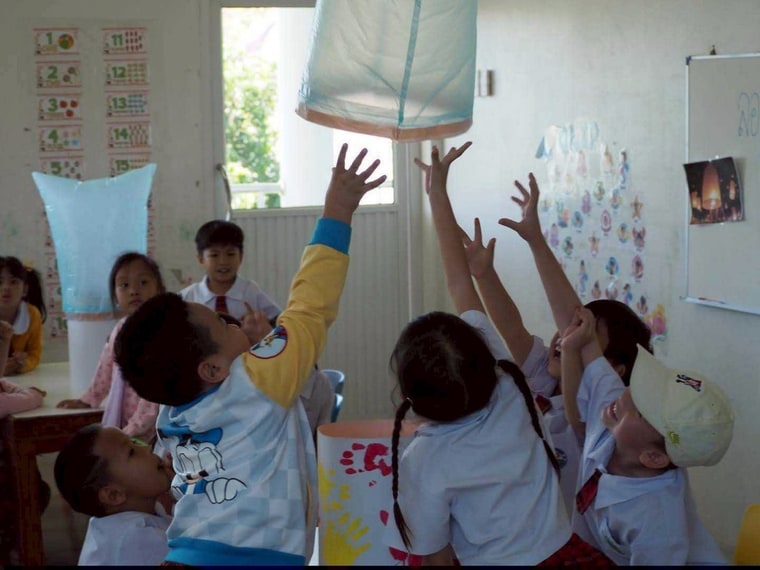
Children Learn Deeply When Learning Has Meaning
Project-Based Learning gives children opportunities to explore real-world topics through play, investigation, creation, discussion, and hands-on experiences — asking questions, investigating materials, building models, cooking, drawing, visiting real places, and sharing what they discover.
Multilingual Learning Every Day
Children experience languages naturally through daily communication, activities, songs, stories and play. Our goal is not simply vocabulary — it is the confidence to listen, understand, communicate, and enjoy using different languages.
Integrated through English Workshop, Phonics, reading and writing, songs, stories, classroom communication and daily routines.
Listening and speaking, vocabulary, early literacy, Thai reading and writing, cultural understanding and confidence.
Introduced through Japanese Workshop, songs and movement, everyday vocabulary, seasonal activities and cultural experiences.
A Day at Promkun
Every day at Promkun includes a thoughtful balance of learning, movement, play, social interaction, rest, and exploration.
Schedules may vary by age group, special activities, projects and field trips.
Extended stay is available until 6:45 p.m. (additional fees apply).
| 7:15 | School opens |
| 7:20 | Breakfast and free play |
| 8:30 | Greeting and morning dance |
| 8:50 | Morning yoga |
| 9:00 | Learning activities |
| 9:30 | Snack time |
| 9:40 | Free play |
| 10:00 | Learning activities |
| 11:30 | Lunch for K1, free play |
| 12:00 | Nap time K1 · Lunch K2–K3 |
| 12:30 | Quiet time K2–K3 |
| 13:15 | Learning activities K2–K3 |
| 14:45 | Reflection and conclusion |
| 15:15 | Pick-up time and free play |
| 17:00 | School closes |
Childhood Needs Space to Move
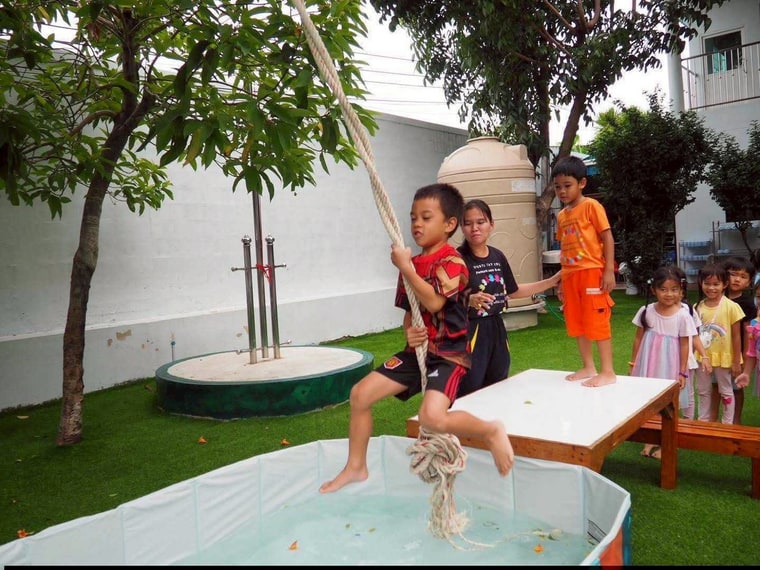
Outdoor play is an essential part of learning at Promkun — running freely, climbing, jumping, balancing, playing with water and sand, observing plants and living things, negotiating with friends, taking age-appropriate risks, and building resilience.
Outdoor play is not a break from learning. Outdoor play is learning.
One Topic, A Whole World of Learning
Our curriculum doesn't divide learning into boxes — it connects everything through meaningful topics. One topic may include English communication, Thai language, Japanese vocabulary, science experiments, mathematics, art, cooking, outdoor discovery, life skills, storytelling and literacy — because in real life, knowledge never arrives as a subject. It arrives as a story worth wondering about.
Indoors and outdoors strengthen different things
Indoor experiences support concentration, language, investigation, creativity and fine skills, while outdoor experiences nurture movement, confidence, resilience, social interaction and connection with nature. A child who gets both every day develops more completely than one who only sits at a desk — which is why our schedule alternates indoors and outdoors all day long.
Growing kind hearts alongside strong minds
Education is not only about what children know; it is about who they become. Our moral education helps children develop kindness, empathy, respect, responsibility, gratitude, patience, care for others, care for belongings and care for shared spaces — through stories, discussions, role play, real situations and daily relationships. Strong minds and kind hearts grow together.