
Your Child's First Steps
Children learn best when they are happy and having fun, and what makes a three-year-old happy is not what makes a six-year-old happy. So from Kindergarten 1 to Kindergarten 3 (ages 3 – 6), we plan each year around what children of that age are ready for, from the first days of getting to know new teachers and friends to the day your child is ready for primary school.
A Closer Look at Each Level
A three-year-old and a six-year-old learn in very different ways, so our teachers adapt both the activities and the care to suit each class.
Kindergarten 1 (K1)
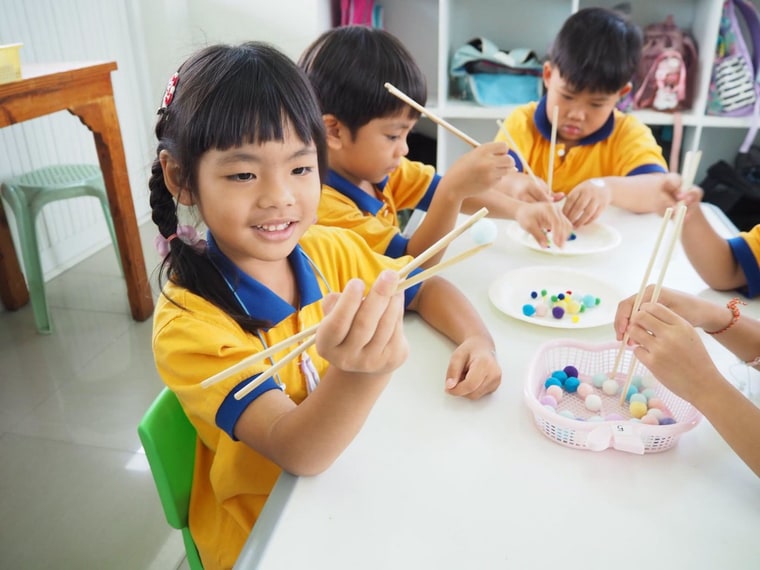
K1 is a year for feeling safe and settled. Your child gets to know the rhythm of the day, starts telling the teachers what they need, and learns through play: picking up coloured balls with tongs, for example, which builds strong little fingers.
- Confidence and emotional security
- Independence and classroom routines
- Communication and exploration through play
- Fine and gross motor development
- First steps in three languages, and first friendships
Kindergarten 2 (K2)
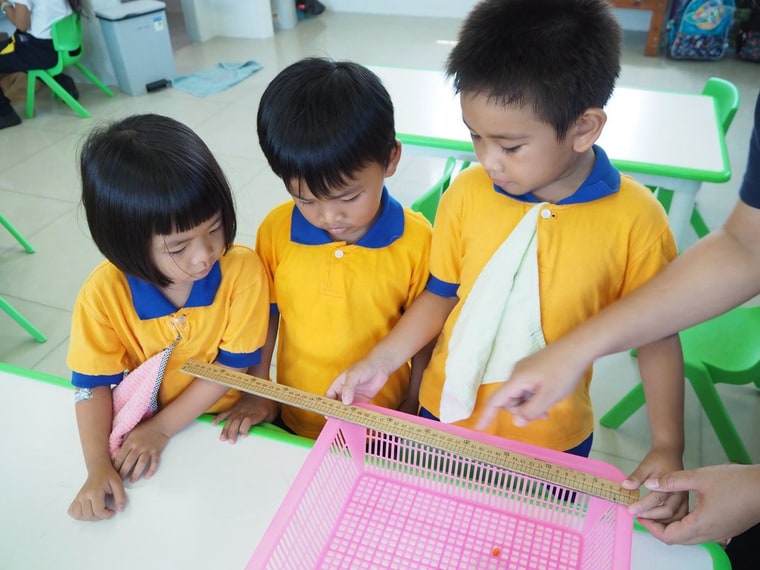
K2 is a year of discovery. Children grow bolder about speaking up and telling their own stories, begin reading, writing and counting, and take on projects with friends, like weaving together on a grid board, where every pair of hands is needed.
- Communication skills and confident expression
- Early literacy and numeracy
- Problem-solving and thinking
- Projects and exploration
- Independence and cooperation
Kindergarten 3 (K3)
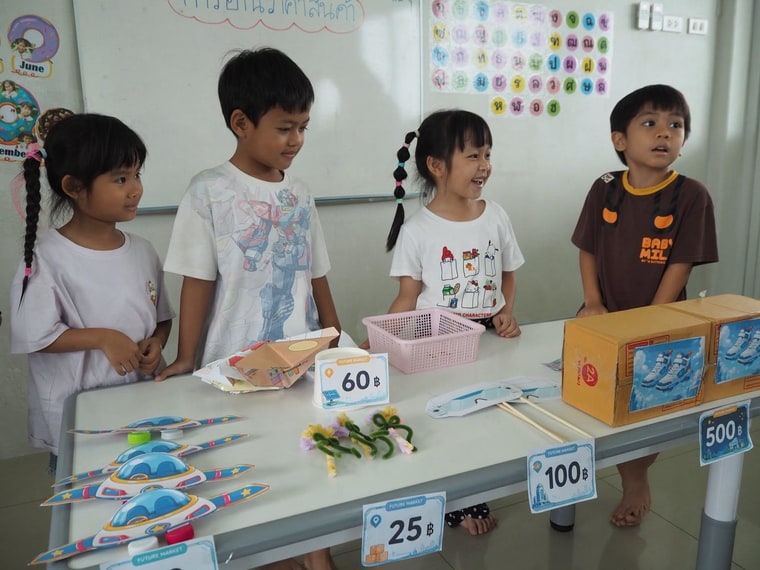
K3 is the last year before primary school. Children read and write with more confidence, work things out with numbers, and take responsibility for their own work. When the class opens its pretend shop, they price the things they have made and serve their customers with real confidence, just the kind of confidence they will carry into their new school.
- School readiness
- Reading and writing development
- Mathematical and critical thinking
- Independence and responsibility
- Confident communication and social-emotional readiness
One Continuous Learning Path, Ages 3 – 6
A child who joins us in K1 can spend three whole years at Promkun. In the first year, your child slowly gets to know the teachers, new friends and the feel of the school. The security, routines and love of learning they build that year carry them through everything that follows. When children move up, their teachers pass on each child’s development notes, so the new teacher already knows a good deal about your child from the very first day.
A day that fits each age
Each class follows its own rhythm. Our K1 children have a nap after lunch, while K2 and K3 have a shorter quiet time followed by an afternoon of learning activities. Whatever the level, every child still has two to three hours of free play each day, because at this age, play is how children learn most.
Watching closely, helping early
Our teachers pay close attention to what each child actually does during the day: how they work out a problem, play with their friends, use language and look after themselves. They write these moments down, so we can see how your child is growing. Teachers share what they notice with you regularly and listen to what you see at home too, so if your child needs a little extra help with something, we can give it together, early on.
Ready for primary school
K3 is the year we prepare children for primary school. Alongside reading, writing and early maths, they practise the everyday skills a new school will ask of them: sharing their ideas with confidence, finishing their own tasks, looking after their belongings, coping with something new, and working well with others. By the end of the year, they are ready to walk into their new school feeling confident, happy and keen to learn.